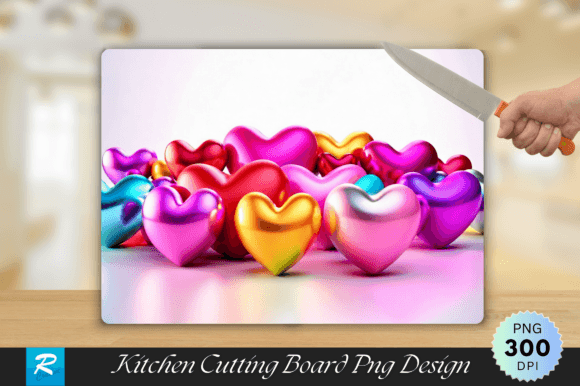
Evaluating the 3D Colorful Heart Cutting Board Design for Sublimation Projects
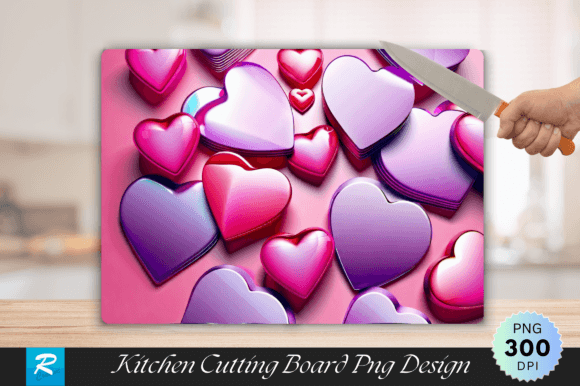
In the competitive landscape of custom kitchenware and personalized home decor, visual distinction is often the deciding factor for consumer engagement. The 3D Colorful Heart Cutting Board Design represents a specific niche within the broader sublimation market, targeting creators who aim to produce high-impact, emotionally resonant products. This digital asset is not merely a graphic; it is a specialized tool designed for manufacturers, small business owners, and hobbyists utilizing dye-sublimation printing techniques. Understanding the technical specifications, practical applications, and inherent limitations of this design file is essential for anyone considering its integration into their product line.
Technical Specifications and File Integrity
The foundation of any successful sublimation project lies in the quality of the source file. This particular design is distributed as a single PNG file with a resolution of 300 DPI (dots per inch) at dimensions of 3480×2460 pixels. For professionals accustomed to print production, these metrics are significant. A resolution of 300 DPI is the industry standard for high-quality printing, ensuring that the final output remains crisp and free from pixelation, even when viewed up close. The large pixel dimensions provide ample flexibility, allowing the design to be scaled for various substrate sizes without compromising clarity.
The inclusion of a transparent background is a critical feature for usability. In sublimation printing, the white areas of a design do not transfer ink; instead, the color of the substrate shows through. A transparent background ensures that the 3D heart motif integrates seamlessly onto cutting boards of different base colors, although white or light-colored blanks are typically recommended to preserve the vibrancy of the colorful elements. The file is delivered in a ZIP archive, a standard compression format that preserves file integrity during download. Users should note that extracting this file requires basic computer literacy and access to unzipping software, as well as a design editing program capable of handling high-resolution PNG formats, such as Adobe Photoshop, CorelDRAW, or Silhouette Studio.
Visual Appeal and Design Characteristics
The core aesthetic of this asset is its "3D" appearance. While the file itself is two-dimensional, the artistic rendering utilizes shading, highlights, and perspective to create an illusion of depth. This trompe-l'oeil effect adds a layer of sophistication that flat graphics often lack. The "colorful" aspect suggests a vibrant palette, likely leveraging the full spectrum of CMYK capabilities inherent in sublimation printing. This makes the design particularly suitable for occasions that call for warmth and affection, such as Valentine’s Day, anniversaries, or housewarming gifts.
However, it is important to manage expectations regarding color fidelity. As noted in the product details, actual colors may vary slightly due to monitor settings. Different computer monitors display colors differently based on calibration, brightness, and panel technology. Furthermore, the final printed result depends heavily on the printer profile, ink quality, and the specific coating of the sublimation blank. Creators must perform test prints to ensure the output matches their brand standards. No watermarks appear on the final items, which is a standard expectation for premium digital assets, but the responsibility for color correction lies with the user.
Practical Applications and Market Versatility
While the primary intended use is for cutting boards, the versatility of this high-resolution PNG extends far beyond kitchenware. The design’s universal theme of love and its adaptable format make it suitable for a multitude of creative projects. Entrepreneurs can leverage this single asset across diverse product lines, maximizing their return on investment. Potential applications include:
- Kitchenware: Standard rectangular or heart-shaped cutting boards, coasters, and placemats.
- Apparel and Accessories: Tote bags, phone cases, and t-shirts, where the transparent background allows for easy placement over fabric textures.
- Drinkware: Mugs and tumblers, provided the design is warped or adjusted to fit the curved surface using appropriate software.
- Home Decor: Wall signs, pillows, and decorative tiles.
This flexibility is particularly valuable for small business owners who need to maintain a cohesive brand aesthetic across multiple product categories without commissioning unique designs for each item. The heart-shaped sublimation design serves as a central visual anchor that can be marketed seasonally or year-round, depending on the accompanying copy and product positioning.
Target Audience and Ideal Use Cases
Who benefits most from acquiring this 3D Colorful Heart Cutting Board Design? The primary audience includes print-on-demand sellers, Etsy shop owners, and local crafters who specialize in personalized gifts. These individuals often face the challenge of creating unique, high-quality designs quickly. Purchasing a pre-made, professional-grade asset allows them to bypass the time-consuming process of graphic design while still offering a product that appears custom-created.
Additionally, marketers and bloggers focusing on lifestyle, home decor, or gift guides may find this design useful for creating mockups and promotional content. The high resolution ensures that images used in online listings remain sharp and appealing, which is crucial for conversion rates in e-commerce. Educators teaching graphic design or sublimation techniques might also use this file as a case study for demonstrating how transparency and resolution impact final print quality.
Limitations and Considerations for Best Results
Despite its strengths, there are practical limitations to consider. First, the design is static. Users cannot easily modify the internal elements of the 3D heart without advanced graphic design skills, as it is a flattened PNG rather than a layered vector or PSD file. This means customization is limited to scaling, rotating, or adding text around the central image. For those seeking fully editable components, this format may be restrictive.
Second, the success of the final product is heavily dependent on the quality of the sublimation blank. A low-quality cutting board with an uneven coating will result in blotchy ink transfer, regardless of the file’s resolution. Users must source reputable blanks to ensure the colorful kitchen accessory meets customer expectations. Furthermore, the note that "colors and quality may vary" depending on printing methods is not just a disclaimer; it is a reality of the sublimation process. Consistency requires rigorous quality control and standardized printing procedures.
Long-Term Value and Workflow Integration
From a workflow perspective, integrating this custom sublimation design is straightforward. Once unzipped, the PNG can be imported directly into most design software. Its transparency allows for quick layering with other elements, such as personalized names or dates, enhancing the perceived value of the final product. The durability of the digital file means it can be reused indefinitely, making it a cost-effective asset for long-term business operations.
The trend toward personalized, emotionally connected home goods continues to grow. A personalized cutting board featuring a striking 3D heart design taps into this demand effectively. It offers a tangible way for consumers to express affection, making it a perennial seller rather than a fleeting trend. For creators, the ability to offer such a visually compelling product with minimal upfront design effort represents a strategic advantage.
In conclusion, the 3D Colorful Heart Cutting Board Design is a robust, professional-grade digital asset suited for serious creators and businesses. Its high resolution, transparent background, and versatile application potential make it a valuable addition to any sublimation library. However, users must account for color variability and invest in quality printing materials to fully realize its potential. By understanding both the capabilities and the constraints of this design, entrepreneurs can effectively leverage it to create distinctive, high-quality products that resonate with their target audience.