Mastering Box Packaging 3D Mockup with Die Line for Premium Brand Identity
In the competitive landscape of modern retail, the unboxing experience is often the first tangible interaction a customer has with a brand. This critical moment defines perception, establishes value, and drives social sharing. To achieve this level of impact, designers and business owners are increasingly turning to advanced digital tools, specifically the Box Packaging 3D Mockup with Die Line. This technology bridges the gap between conceptual artistry and physical production, allowing for precise visualization and error-free manufacturing.
Whether you are developing a luxury packaging box for high-end cosmetics or creating eco-friendly packaging design for sustainable goods, understanding the mechanics of 3D illustration and vector templates is essential. This article explores how these digital assets transform product presentation, streamline the design process, and ensure that the final physical product matches the digital vision perfectly.
The Evolution of Product Packaging Design
Gone are the days when packaging was merely a protective shell. Today, product packaging design is a silent salesman. It communicates brand values, differentiates products on crowded shelves, and enhances user experience. The shift towards innovative packaging design has been driven by consumer demand for aesthetics and sustainability. However, translating a two-dimensional idea into a three-dimensional object is complex. This is where the 3D box packaging design workflow becomes indispensable.
By utilizing a 3D packaging box design vector, creators can manipulate light, shadow, texture, and structure in a virtual environment. This allows for rapid iteration without the cost of physical prototyping. For industries ranging from food and beverage to electronics and fashion, the ability to visualize a bespoke packaging box before production saves time, reduces waste, and ensures structural integrity.
Understanding the Core Components: Mockups, Die Lines, and Vectors
To leverage these tools effectively, one must understand the three pillars of digital packaging design: the mockup, the die line, and the vector artwork.
1. The 3D Mockup
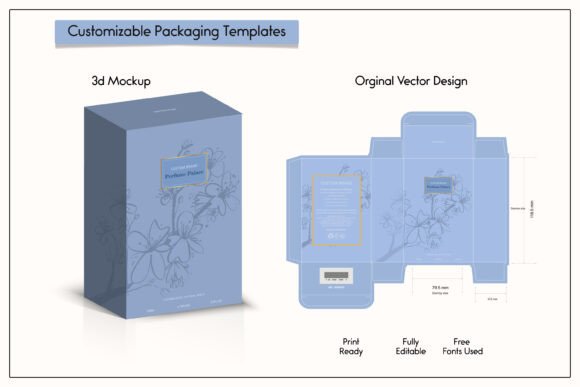
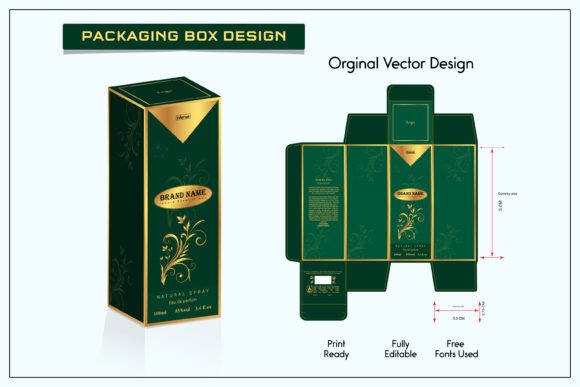
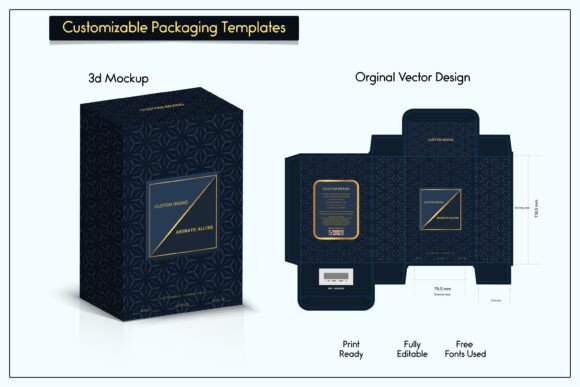
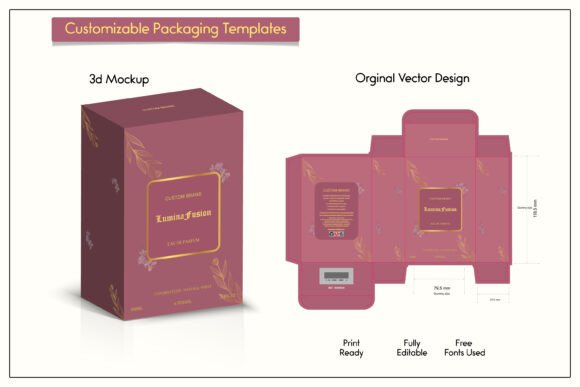
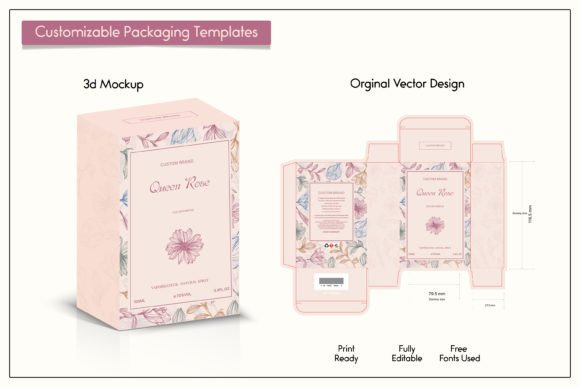
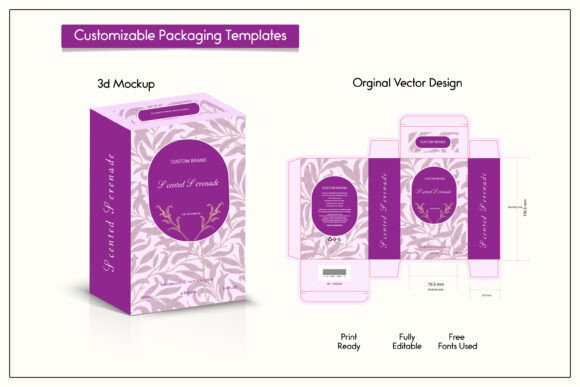
A box mockup is a realistic digital representation of the final package. It includes details such as material texture (e.g., matte, gloss, kraft paper), lighting effects, and spatial context. High-quality mockups allow designers to present their concepts to clients or stakeholders in a photorealistic manner. For instance, a fragrance perfume luxury box requires specific rendering techniques to showcase foil stamping, embossing, or soft-touch finishes. A superior mockup captures these nuances, providing a clear expectation of the final product.
2. The Die Line
The die line is the technical blueprint of the package. It is a vector path that indicates where the material will be cut, folded, and glued. Accuracy here is paramount. A slight error in the die line can result in a box that does not close properly or labels that misalign. When you acquire a 3D box die line template, you are getting a pre-engineered structure that has been tested for feasibility. This is particularly important for complex structures like magnetic closure boxes or drawer-style slides, which are common in premium packaging box design for all industries.
3. Vector Design Templates
Vector graphics are resolution-independent, meaning they can be scaled to any size without losing quality. A vector design template provides the foundational layout for your artwork. Because packaging often involves large formats or intricate details, working with vectors ensures crisp edges and clean typography. Most professional templates come in AI (Adobe Illustrator) format, allowing full editability of colors, shapes, and text.
Applications Across Industries
The versatility of custom packaging box design tools means they are applicable across a wide spectrum of sectors. Here is how different industries benefit from these resources:
- Beauty and Cosmetics: This sector relies heavily on luxury packaging box aesthetics. Brands use 3D mockups to test gold foil accents, window cutouts, and elegant typography. The visual appeal directly correlates with perceived product value.
- Fragrance and Perfume: A fragrance perfume luxury box often features unique structural elements. Designers use specialized templates to create heavy-board rigid boxes that protect delicate glass bottles while exuding sophistication.
- E-commerce and Retail: With the rise of online shopping, retail packaging design must survive shipping while delighting customers upon arrival. Corrugated packaging design templates help optimize strength and material usage, ensuring products arrive intact.
- Sustainable Brands: Companies focused on sustainable packaging solutions use these tools to minimize material waste. By optimizing the die line, designers can reduce off-cuts and choose eco-friendly materials like recycled cardboard, accurately visualizing the natural texture in 3D.
Why Choose Professional Vector Templates?
While it is possible to create packaging designs from scratch, using professional 3D illustration templates offers significant advantages. Firstly, it ensures technical accuracy. Professional templates are created by experienced structural designers who understand the limitations of printing and folding processes. Secondly, it accelerates the workflow. Instead of spending hours drawing fold lines and calculating dimensions, designers can focus on creativity—placing logos, selecting color palettes, and arranging design elements.
Moreover, these templates often come with organized layers. For example, you might receive a file where the die line, bleed area, safety margin, and artwork are on separate layers. This organization prevents common printing errors, such as placing critical text too close to the cut edge. As noted in many professional offerings, you get "100 original vector design and artwork, converted to any size without the loss of quality." This scalability is crucial for brands that may want to adapt a design for different product sizes within the same line.
Practical Guidance for Using Packaging Assets
When you download a comprehensive package, such as a zip file containing AI, PDF, and JPG files, knowing how to utilize them is key. Here is a practical approach to integrating these assets into your workflow:
- Unzip and Organize: Use software like WinRAR or WinZip to extract the files. You will typically find an AI file for editing, a PDF for print-ready proofing, and JPGs for quick previews or web use.
- Review the Die Line: Open the AI file and locate the die line layer. Ensure it is set to a non-printing color (usually red or magenta) and locked to prevent accidental movement.
- Place Your Artwork: Create a new layer above the die line for your design. Import your logos, images, and text. Remember to keep critical elements within the safety margin to avoid them being cut off.
- Utilize Smart Objects: Many 3D mockups use smart objects in Photoshop. This allows you to double-click a layer, paste your flat design, and save it, automatically updating the 3D view with correct perspective and lighting.
- Check Color Profiles: Ensure your design is in CMYK color mode for printing, rather than RGB which is used for screens. This prevents color shifts between the digital mockup and the physical box.
Considerations and Limitations
While creative packaging ideas brought to life through 3D tools are powerful, there are limitations to consider. Digital mockups, no matter how realistic, cannot fully replicate the tactile experience of materials. The weight of the paper, the texture of embossing, and the sheen of spot UV coating are best evaluated with physical samples. Therefore, always order a physical prototype before committing to a large production run.
Additionally, not all designs are manufacturable. Complex folds or excessive use of heavy inks can weaken the structure of a corrugated packaging design. Collaborating with your manufacturer early in the design phase ensures that your innovative packaging design is both beautiful and functional.
Embracing Future Trends in Packaging
The future of packaging lies in personalization and sustainability. Packaging design trends are shifting towards minimalism, biodegradable materials, and interactive elements like QR codes. Using flexible vector design templates allows brands to adapt quickly to these trends. You can easily swap out design elements, update sustainability certifications, or introduce limited-edition artwork without rebuilding the entire structural framework.
Furthermore, the integration of Augmented Reality (AR) with packaging is becoming more common. A well-structured digital asset can serve as the foundation for AR experiences, where scanning the box reveals additional content on a smartphone. This blends the physical and digital worlds, enhancing customer engagement.
Conclusion
In conclusion, the Box Packaging 3D Mockup with Die Line is more than just a design tool; it is a strategic asset for brand building. It empowers creators to produce premium packaging box designs that stand out in any industry. By combining technical precision with creative freedom, these templates enable the production of high-quality, sustainable, and visually stunning packages. Whether you are a small business owner looking for custom packaging box design or a professional designer seeking efficiency, mastering these digital resources is a step toward elevating your brand’s physical presence. Remember, the goal is not just to contain a product, but to tell a story, evoke emotion, and deliver an unforgettable unboxing experience.