Modern Luxury Product Box Packaging: Elevating Brand Perception Through Design
In the crowded marketplace of today, the first interaction a customer has with your brand is often tactile. Before they smell the fragrance, taste the confection, or apply the serum, they hold the box. Modern luxury product box packaging is no longer just a container; it is a silent ambassador for your brand’s values, quality, and attention to detail. For businesses aiming to command premium pricing and foster deep customer loyalty, investing in high-end packaging design is not an expense—it is a strategic necessity.
The concept of luxury packaging has evolved. It is no longer defined solely by heavy cardstock and gold foil. Today, it is about the harmony of structure, graphic design, and user experience. When we talk about luxury perfume packaging box design, for instance, we are discussing an architectural element that protects a fragile glass vessel while simultaneously building anticipation. The weight of the box, the smoothness of the finish, and the precision of the die-cut lines all contribute to a narrative of exclusivity.
The Strategic Role of 3D Visualization in Packaging Development
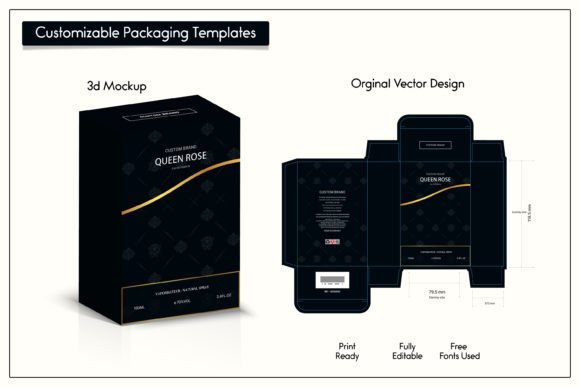
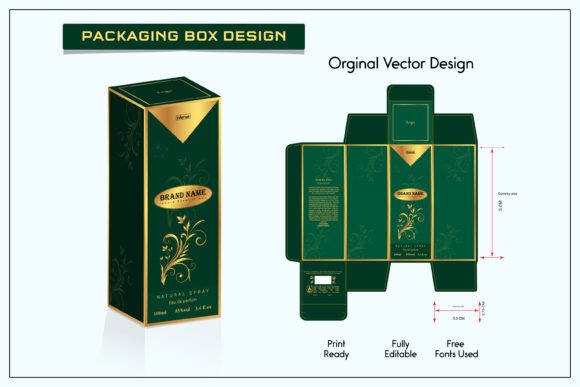
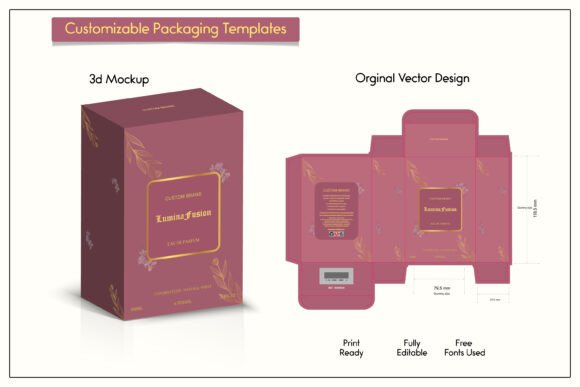
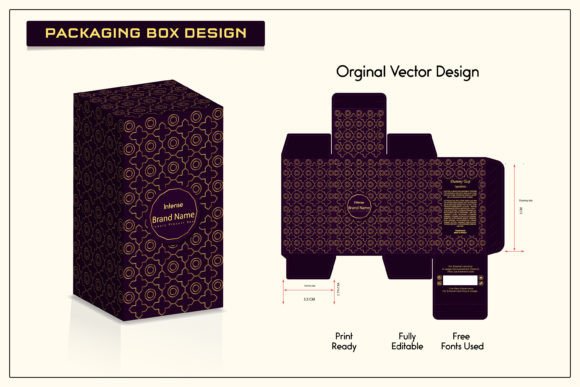
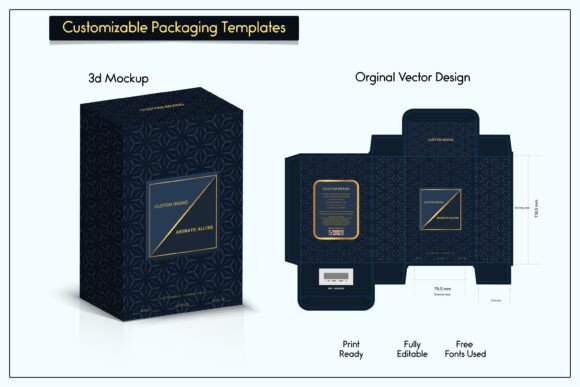
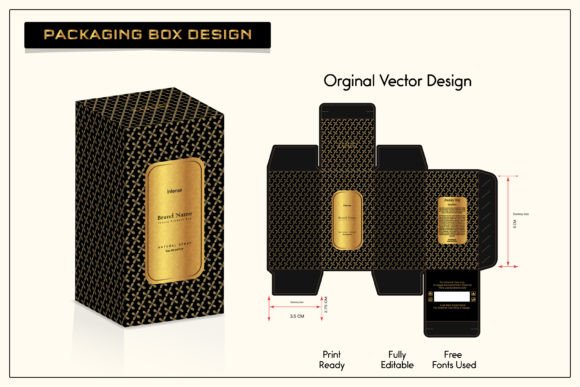
One of the most significant hurdles in packaging design is the gap between a two-dimensional concept and a three-dimensional reality. This is where 3D box die line technology and advanced box mockup labels become indispensable tools for designers and brand owners alike. Traditionally, creating a physical prototype was a time-consuming and costly process involving multiple rounds of sampling. Modern digital workflows have disrupted this timeline.
By utilizing 3D illustration and vector design templates, creators can visualize exactly how light interacts with different finishes—such as matte lamination versus spot UV coating—before a single sheet of paper is cut. This capability allows for rapid iteration. A designer can test various frames and design elements to see which composition best highlights the product name or logo. For startups and small businesses, this means reducing waste and ensuring that the final print run matches the digital vision perfectly.
Consider the scenario of a niche fragrance brand launching its debut scent. The founder needs to present the packaging to investors or potential retail partners months before mass production begins. Using a high-fidelity 3D packaging box design, they can create photorealistic renders that showcase the elegance of the box from every angle. These visuals can be used in pitch decks, social media teasers, and pre-launch campaigns, generating buzz without the overhead of physical inventory.
Versatility Across Industries: Beyond Perfume
While fragrance perfume luxury boxes are often the benchmark for high-end packaging due to their intricate requirements, the principles of premium design apply across a vast spectrum of industries. The demand for premium packaging box design for all industries is driven by the consumer’s desire for unboxing experiences that feel special, regardless of the product inside.
- Cosmetics and Skincare: In this sector, cleanliness and minimalism often define luxury. A well-designed vector template allows brands to maintain consistent typography and spacing across entire product lines, from serums to creams. The use of clean lines and subtle embossing can convey clinical efficacy paired with indulgent self-care.
- Gourmet Food and Confectionery: Here, the packaging must protect delicate items while appealing to the senses. Rich colors and textured finishes suggested in a 3D box packaging design can evoke feelings of warmth and tradition. Designers can experiment with window cut-outs or unique folding structures that reveal the product gradually.
- Tech Accessories: Even small items like headphones or smartwatches benefit from rigid, structured boxes. The "apple-esque" simplicity relies heavily on precise die lines and high-quality material simulation in the design phase to ensure the fit is snug and the opening mechanism feels satisfying.
The beauty of working with editable vector design templates is their adaptability. A single robust template can be resized and reconfigured to fit a lipstick tube, a candle jar, or a bottle of artisanal olive oil. This flexibility is crucial for brands that plan to expand their product ranges, as it ensures brand consistency without starting from scratch for every new SKU.
Understanding the Technical Deliverables
For those looking to implement these designs, understanding what constitutes a professional-grade file package is essential. When you acquire a modern luxury product box packaging design asset, you are typically receiving a comprehensive suite of files designed for both visualization and production preparation. It is important to distinguish between a mockup and a manufacturing blueprint.
A standard delivery usually includes a zip file containing:
- AI File: The Adobe Illustrator source file. This is the heart of the project, containing editable layers, vectors, and text. Because it is vector-based, you can resize the design to any dimension without losing quality. This is critical for adjusting the artwork to fit specific box sizes or printing requirements.
- PDF Print File: A high-resolution PDF optimized for professional printing. This file often includes bleed areas and crop marks, guiding the printer on where to cut and fold. It ensures that colors remain consistent and images are sharp.
- JPG File: High-resolution raster images used for previews, online listings, or quick sharing with stakeholders who do not have design software.
It is vital to note that these are digital cut files and mockups. They are not physical items. No physical box will be mailed to you. Instead, you receive the editable version to customize for business or personal uses. This distinction is crucial for new entrepreneurs who might confuse a design template with a manufacturing service. You will need to take these files to a local or online printing house that specializes in rigid boxes or folding cartons to produce the physical inventory.
Customization and Creative Freedom
The true power of these templates lies in their editability. You are not locked into a preset color scheme or logo placement. With the provided AI file, you can create a new design layer above the existing structure. This allows you to place your branding, regulatory information, and decorative elements precisely where they need to be.
For example, if you are designing a luxury perfume packaging box, you might want to add a metallic foil effect to your logo. In the vector file, you can designate specific spots for foil stamping. Similarly, if you want to change the background texture from a smooth matte to a linen finish, the layered structure of the template makes this straightforward. The ability to resize elements without quality loss means that whether you are producing a miniature sample size or a large gift set, the graphics remain crisp and professional.
However, there are considerations to keep in mind. While the digital design can be infinitely adjusted, physical printing has limitations. Complex gradients, extremely fine lines, or certain color combinations may look different on screen than they do on paper. It is always advisable to order a physical proof from your printer before committing to a full run. The 3D illustration serves as a highly accurate guide, but material absorption and lighting conditions in the real world can alter the final appearance slightly.
Making the Right Choice for Your Brand
Choosing the right packaging design is about balancing aesthetics with practicality. When evaluating modern luxury product box packaging options, consider your target audience’s expectations. Are they drawn to bold, maximalist designs, or do they prefer understated elegance? The frames and design elements you choose should reflect this preference.
Furthermore, think about the logistics. A complex box structure with multiple folds and inserts may look stunning in a 3D box mockup, but it could significantly increase assembly time and shipping costs. Simpler designs with high-impact graphics often offer a better return on investment. The key is to use the vector design template to experiment with these variables virtually. Test how the box looks when closed, open, and partially unwrapped. Ensure that the die line aligns perfectly with your graphic elements so that no crucial text gets cut off or folded away.
Ultimately, investing in high-quality, editable packaging designs empowers you to control your brand’s narrative. It allows you to present a polished, professional image that competes with established luxury giants. By leveraging these digital tools, you can iterate quickly, reduce errors, and create a unboxing experience that resonates with customers long after the product itself has been used. Whether you are launching a new fragrance, a skincare line, or a gourmet food brand, the right packaging design is the foundation of perceived value.